


Warning Signs of a Slow-Healing Wound

 American Endovascular & Amputation Prevention
If you have a cut or sore on your leg or foot that just won’t heal, you may be wondering why. It’s a question many New Yorkers ask after weeks of watching a wound stay the same, reopen, or get worse.
The short answer is a wound that won’t heal is your body’s way of signaling something deeper. In many cases, slow-healing wounds on the legs and feet are a warning sign of peripheral artery disease (PAD), a circulation condition that affects millions of Americans.
What Is a Slow-Healing Wound?
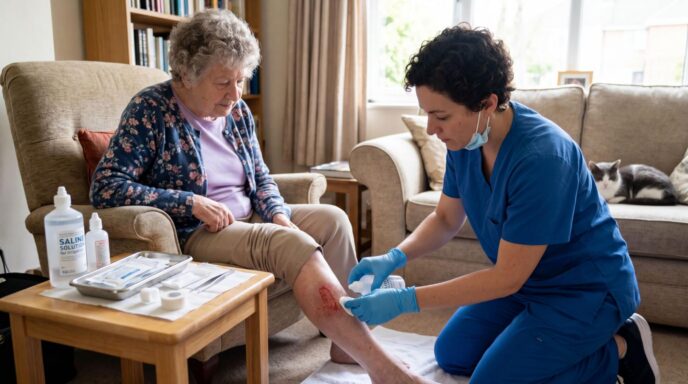
In most people, a cut should start to scab within about four days and close within two to four weeks. A wound is considered slow-healing, or non-healing, when it hasn’t shown clear improvement after two weeks, hasn’t fully closed after about eight weeks, or keeps reopening in the same spot.
These wounds matter most on the legs and feet because that’s where circulation problems show up first. Your lower extremities are the farthest point from your heart, so when blood flow is compromised, the tissue there is the first to be starved of the oxygen and nutrients it needs to repair itself. These slow-healing wounds, especially on the feet, legs, or ankles, can quietly become serious health risks.
Warning Signs Your Wound Isn’t Healing
It isn’t only about how long a wound has been there. Other red flags suggest it needs medical attention:
- A wound that hasn’t visibly improved after two weeks, or that grows, deepens, or keeps reopening
- A sore that appears scabbed over but never actually gets smaller
- Persistent redness, swelling, warmth, or foul-smelling drainage around the edges
- Increasing pain, numbness, or tingling at or near the wound
- Darkening, paleness, or a bluish tint to the skin nearby
When several of these show up together, it’s a clear signal that the wound needs to be evaluated by a specialist.
Common Causes of Slow Healing Wounds on Legs
Healing depends on oxygen-rich blood, healthy nerves, and a working immune response. The most common slow-healing wound causes include:
- Poor circulation: Narrowed or blocked arteries keep blood from reaching the wound to deliver what’s needed for repair.
- Diabetes: High blood sugar damages blood vessels and nerves over time, which is why diabetes is one of the biggest risk factors for non-healing wounds.
- Infection: Bacteria can stop a wound from closing.
- Venous insufficiency: When valves in your leg veins don’t work properly, blood pools in the lower legs, leading to swelling and venous ulcers.
- Smoking: Tobacco constricts blood vessels and accelerates plaque buildup, choking off circulation to your legs and feet.
- Aging: Skin becomes thinner and circulation less efficient with age, so wounds often take longer to heal in older adults.
- Pressure or repeated trauma: Wounds that develop in spots that take constant pressure or friction can struggle to close.
Poor circulation sits at the center of most chronic lower-limb wounds, and that’s where peripheral artery disease comes in.
How Peripheral Artery Disease Causes Slow-Healing Wounds
Peripheral artery disease (PAD) develops when plaque gradually builds up inside the arteries that carry blood to your limbs, narrowing them and reducing flow to your legs and feet. PAD can develop with no symptoms at all in its early stages, which is part of what makes it so important to recognize the warning signs.
When the arteries feeding your lower limbs are blocked, the tissue downstream simply can’t get enough oxygen to repair itself. A small sore that would normally heal in days can instead turn into an open wound that lingers for months. A non-healing wound is considered a serious and more advanced sign of PAD and one that calls for evaluation as soon as possible.
If a blocked artery isn’t addressed, the wound may persist, become infected, or progress to a deeper ulcer. In the most serious cases, untreated PAD-related wounds can threaten the limb itself. The encouraging news is that many of these outcomes are preventable with earlier diagnosis and amputation prevention care.
Other common signs of PAD include leg pain, leg discoloration, and numbness or tingling in the legs or feet
Treatment Options for Slow-Healing Wounds
When PAD is the underlying cause, restoring blood flow is what gives your body what it needs to heal. American Endovascular’s affiliated specialists use minimally invasive, image-guided endovascular treatments to reopen blocked or narrowed arteries, all on an outpatient basis with no large incisions and no hospital stay. The most common options include:
1. Angioplasty
Angioplasty uses a small balloon, guided into the narrowed artery, that inflates to widen it and restore blood flow.
2. Stent Placement
A stent is a small mesh tube placed inside the artery after angioplasty to keep it open and prevent it from narrowing again.
3. Atherectomy
Atherectomy uses a specialized catheter to physically remove plaque from the artery walls, clearing the blockage at its source.
Once circulation is restored, wounds that have resisted healing for months often begin to close, dramatically lowering the risk of infection, amputation, and other complications.
Schedule an Appointment in NYC Today
If you or someone you love is dealing with a slow-healing wound, help is available. A vascular specialist can use non-invasive tests like the ankle-brachial index (ABI) to diagnose PAD and pinpoint where blood flow is interrupted. Taking action now can make all the difference.
American Endovascular has brought together some of the industry’s top vascular specialists in NYC for one reason: to help save lives, using the latest minimally invasive, image-guided techniques to treat peripheral artery disease.
Don’t wait for your wound to worsen. Schedule an appointment with one of our experienced vascular specialists in Brooklyn, Harlem, or Queens.
- Brooklyn, NY — 71 Carroll Street, Brooklyn, NY 11231
- Queens, NY — 30-30 Northern Blvd, Suite 501, Queens, NY 11101
- Harlem, NY — 505 East 116th Street, 2nd Floor, Harlem, NY 10029
Related Blogs & Videos
Learn more about vascular health, prevention, and care for Peripheral Artery Disease.


Schedule an Appointment at your nearest American Endovascular affiliated center.